Lecture 1: Basic Concept in RL Learning
强化学习中的数学原理 | 第一课

第1课-基本概念(Part1-State,action,policy等)【强化学习的数学原理】
State: The status of the agent with respect to the environment.
State space: the set of all status
Action: For each state, there are five possible actions:
Action space of a state: the set of all possible actions of a state. action space 依赖状态,不同状态 action space 不一样
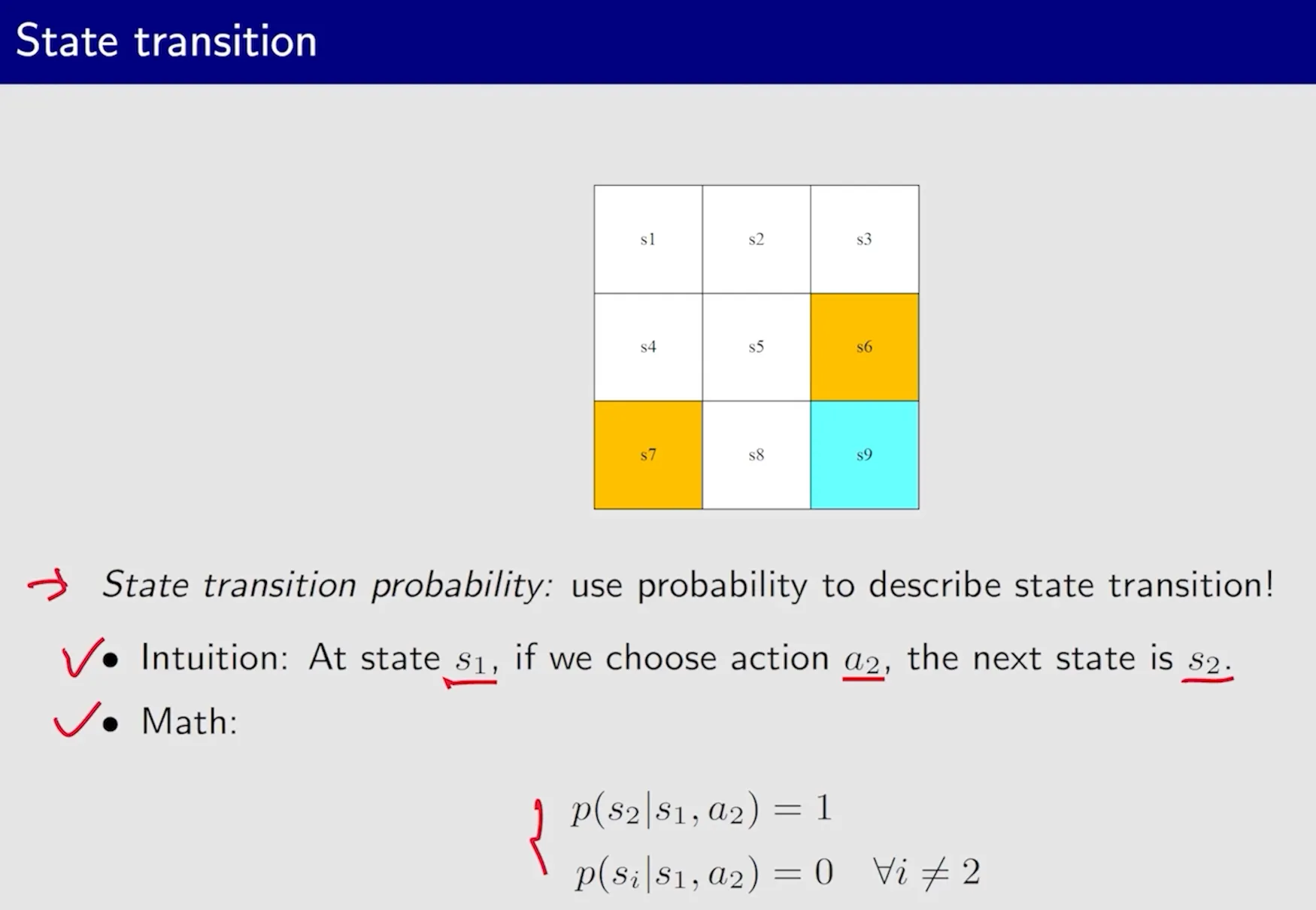
一个关于条件概率的数学表述
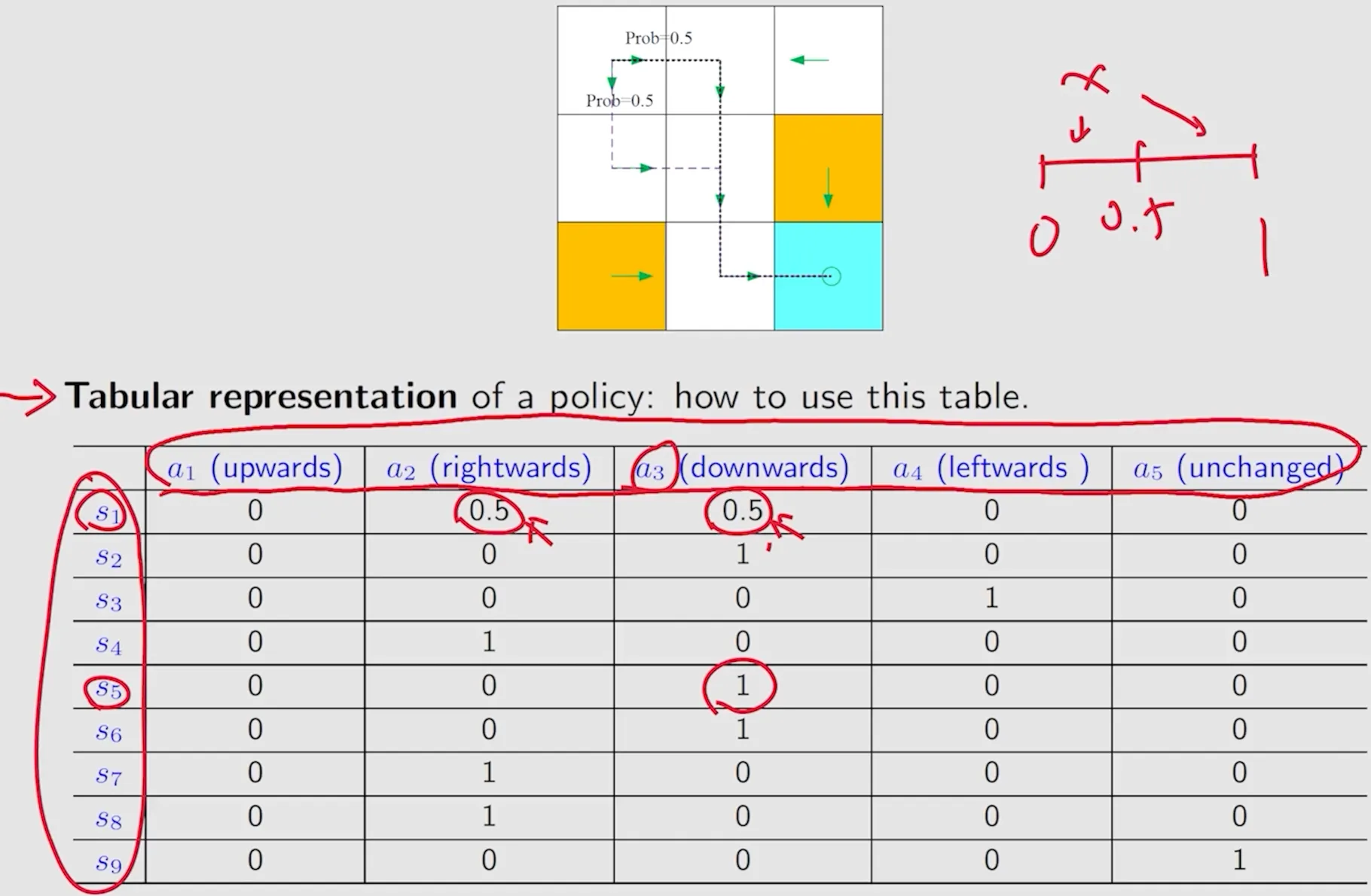
Policy tells the agent what actions to take at a state.
一个在每个状态下采取什么 action 的说明书
Based on the policy, we get paths with different starting points.
这个说明书能够让我们找到不同起点下的一条action路径
Mathematical representation: using conditional probabilty
实际编程的时候,会用一个数组来记录这样的一个表格
Reward: a real nummber we get after taking an action.
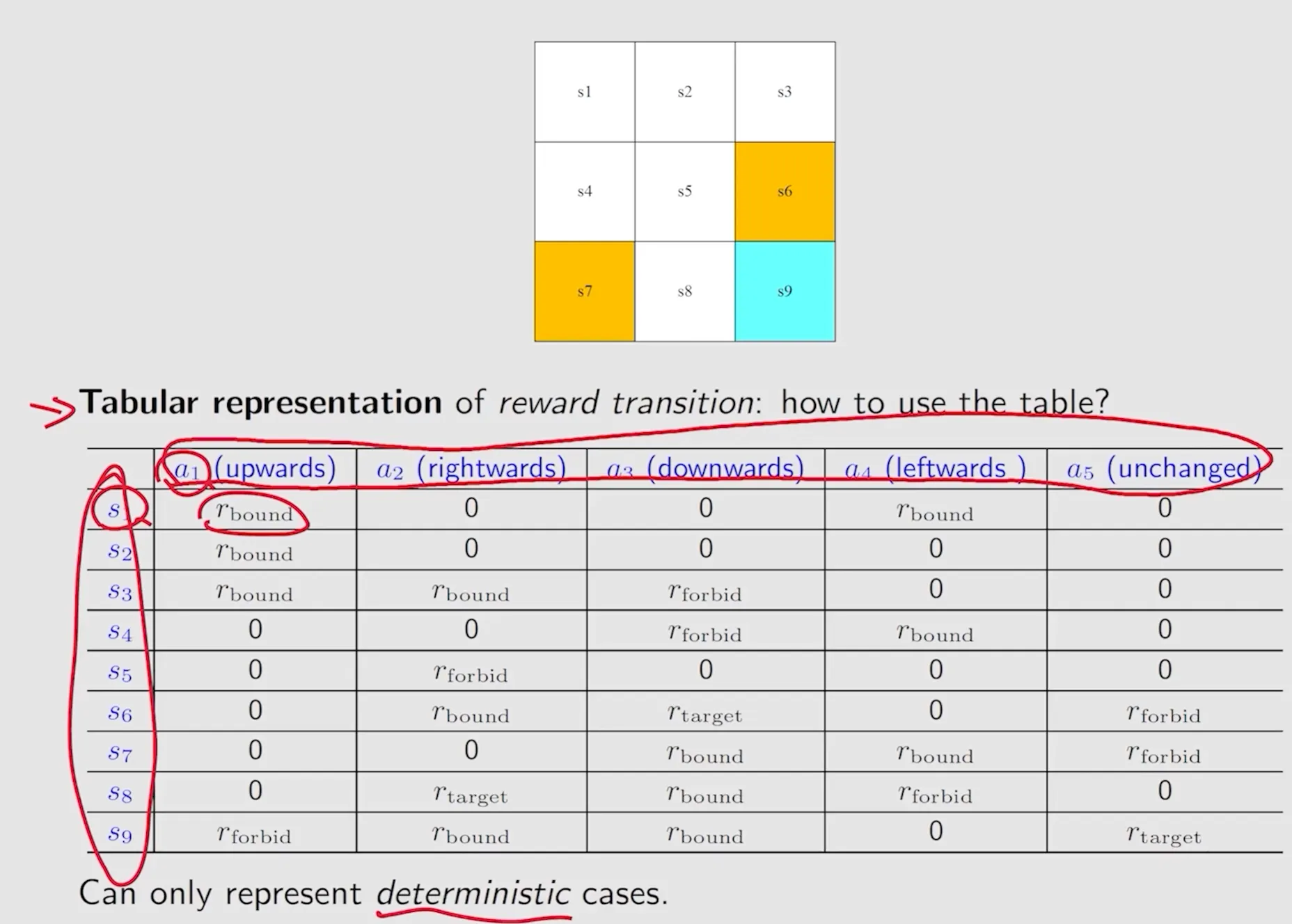
依旧可以用这种表格的形式,但是这样的话只能表示离散的情形
我们也可以用数学的条件概率的表达形式
Math:
这里是一个deterministic 确定的的例子,reward transition也可以是stochastic随机的
A trajectory is a state-action-reward chain.
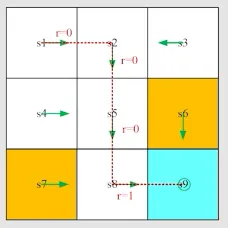
包含了 状态、动作、奖励
The return of this trajectory is the sum of all the rewards cooected along the trajectory:
return 是相对一个 trajectory 而言的
return 的作用是什么?
比较 which policy is better
一个轨迹可能是无限的,reward会一直加,return就会加到无穷,这是我们需要解决的问题
例如:
因此我们引入 discount rate
Discounted return:
discount rate 越接近1,越关注长期 reward ;反之更加近视
在一个 policy 下,agent 会在某个终止状态下停下,这样的一条 trajectory 就叫 episode
有些任务没有终止条件,就叫持续性任务。
在网络世界这个例子里,智能体到达目标点后,我们应该终止任务还是继续,这里有一套数学框架来把回合制任务做成持续性任务
- 把目标点做成吸收态,一旦 agent 进入就永远不能离开
- 把目标点当成普通态,但是只有离开重新进入才能拿到奖励
通过马尔科夫链,把上述的概念串起来,用正式一点的方式
Key elements of MDP:
-
Sets
- State: the set of states
- Action: the set of actions
is associated for state . - Reward: the set of rewards
.
- State: the set of states
-
Probability distribution
- State transition probability: at state
, taking action , the probability to transit to state is - Reward probability: at state
, taking action , the probability to get reward is
- State transition probability: at state
-
Policy: at state
, the probability to choose action is -
Markov property: memoryless property 无记忆性
By using grid‑world examples, we demonstrated the following key concepts:
- State
- Action
- State transition, state transition probability
- Reward, reward probability
- Trajectory, episode, return, discounted return
- Markov decision process